Chapter
Chapter 3: Two-Degree-of-Freedom Coupled Vibration
What is covered
Week 6 2 Nov to 8 Nov 2026
- Two-degree-of-freedom systems
- Coupled equations of motion
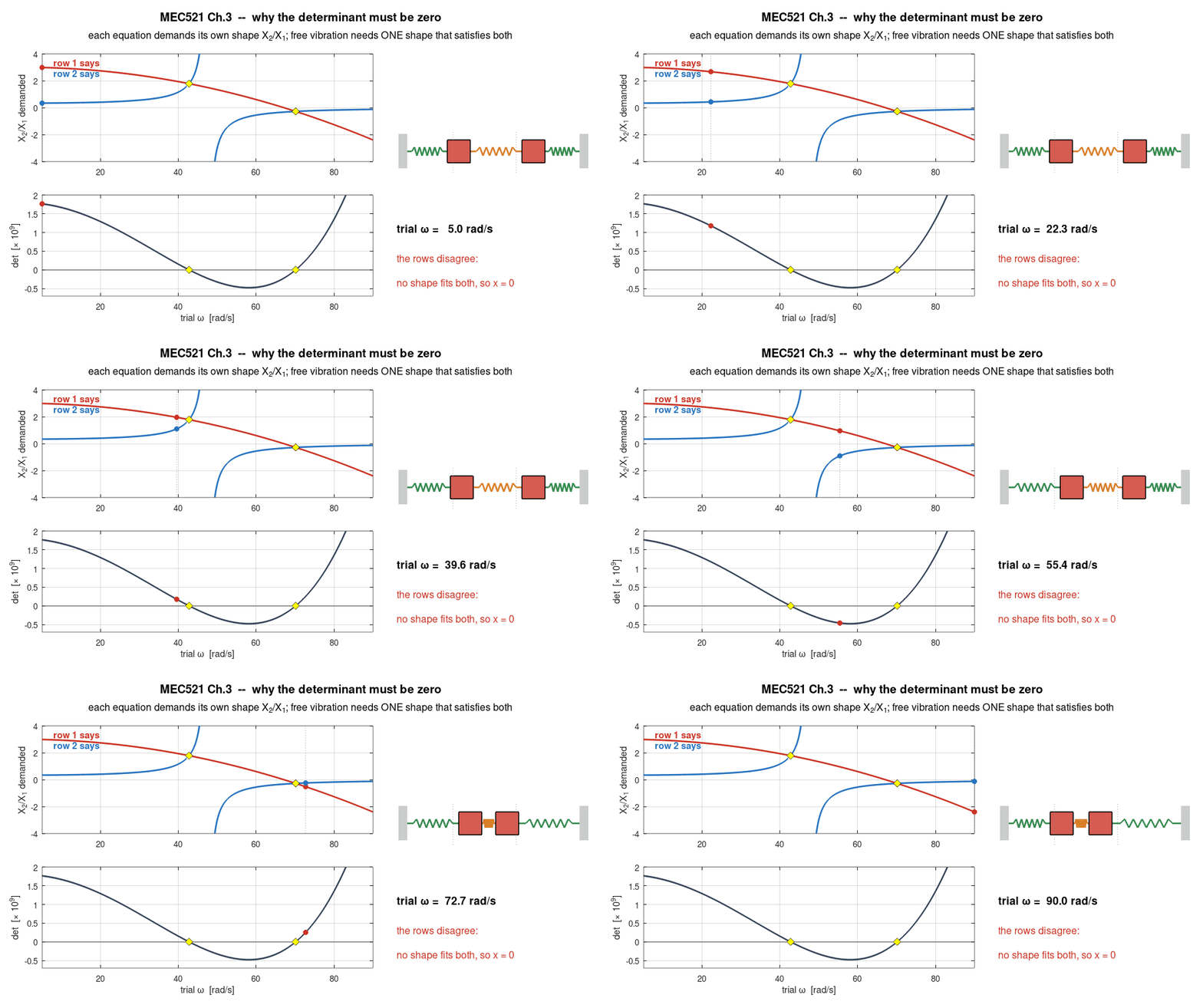
- Why the determinant vanishes
Week 7 9 Nov to 15 Nov 2026
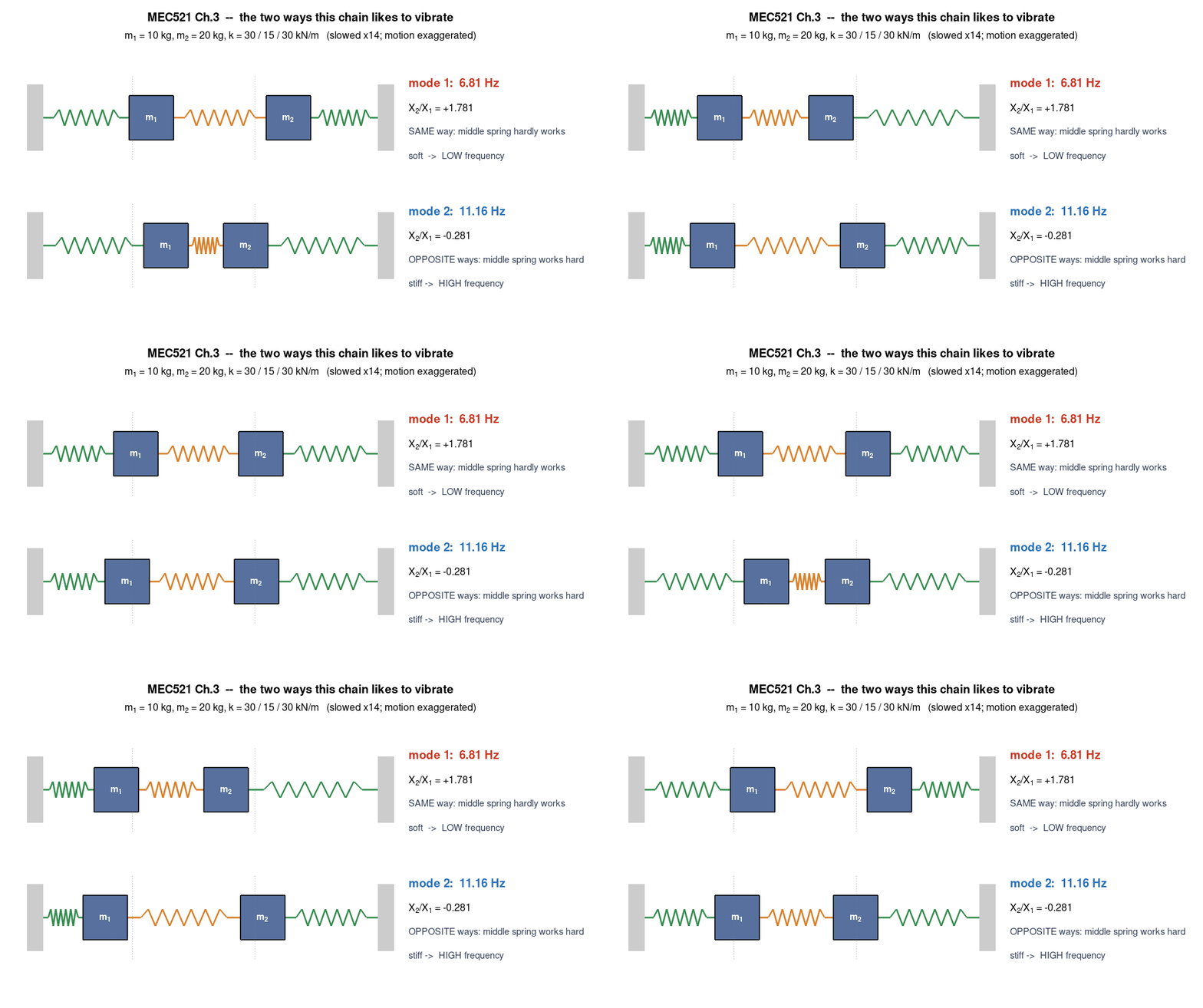
- Natural frequencies and mode shapes
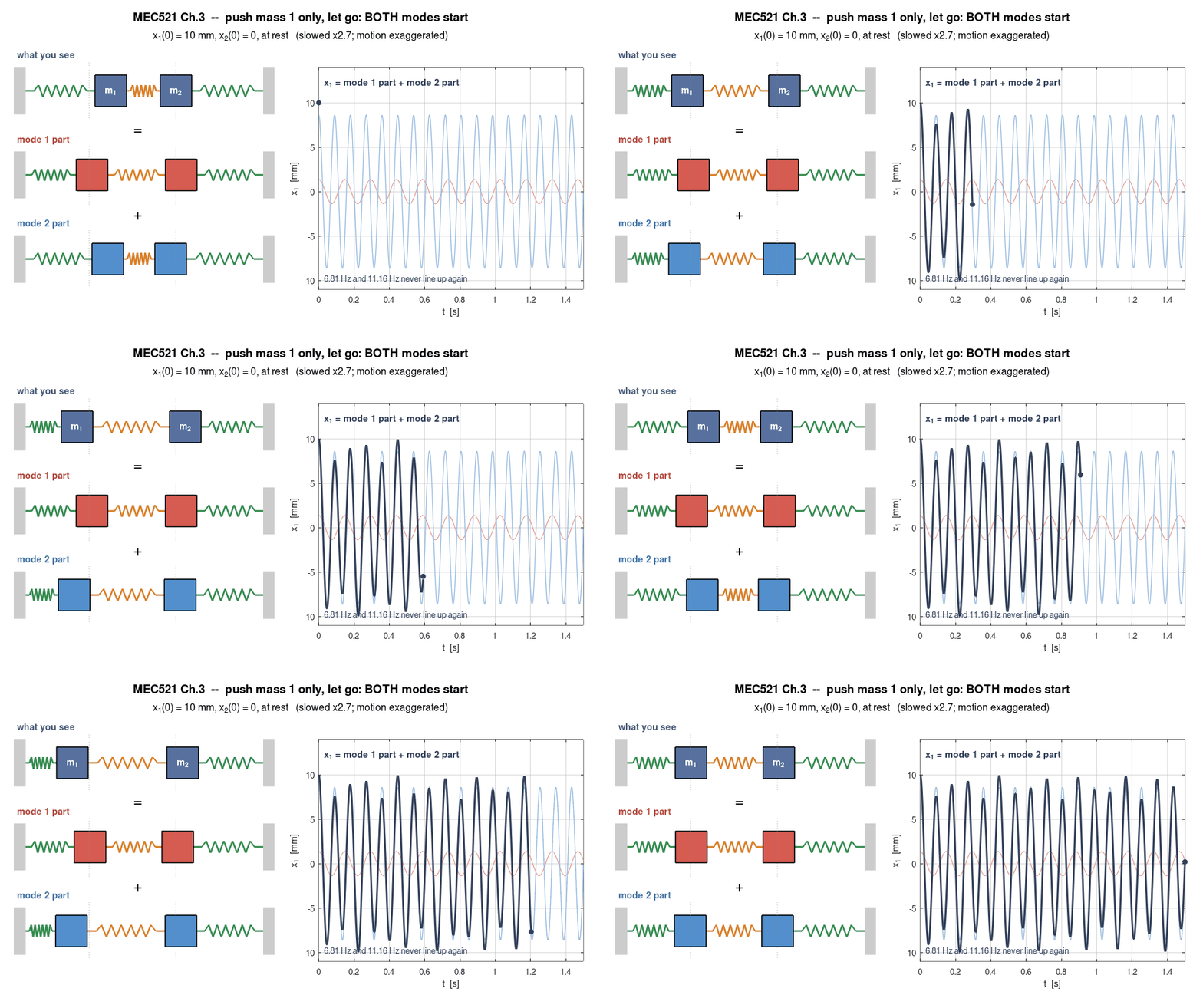
- Normal-mode solution
- Forced vibration and the dynamic vibration absorber
Week 10 30 Nov to 6 Dec 2026
- Natural frequencies and mode shapes
- Normal-mode solution
Week 11 7 Dec to 13 Dec 2026
- Forced vibration of TDOF systems
- Dynamic vibration absorber
- Chapter 5: approximate methods for the fundamental frequency (influence coefficients, Dunkerley, Rayleigh)
Lecture videos
Week 6, 3 parts, about 18 minutes
0 of 3 watched
Progress stays in this browser. Sign in with your UiTM account to record it for your lecturer.
Part 1: From one coordinate to two
Part 2: From free bodies to matrices
Part 3: Why the determinant vanishes
Week 7, 4 parts, about 23 minutes
0 of 4 watched
Part 4: Mode shapes and orthogonality
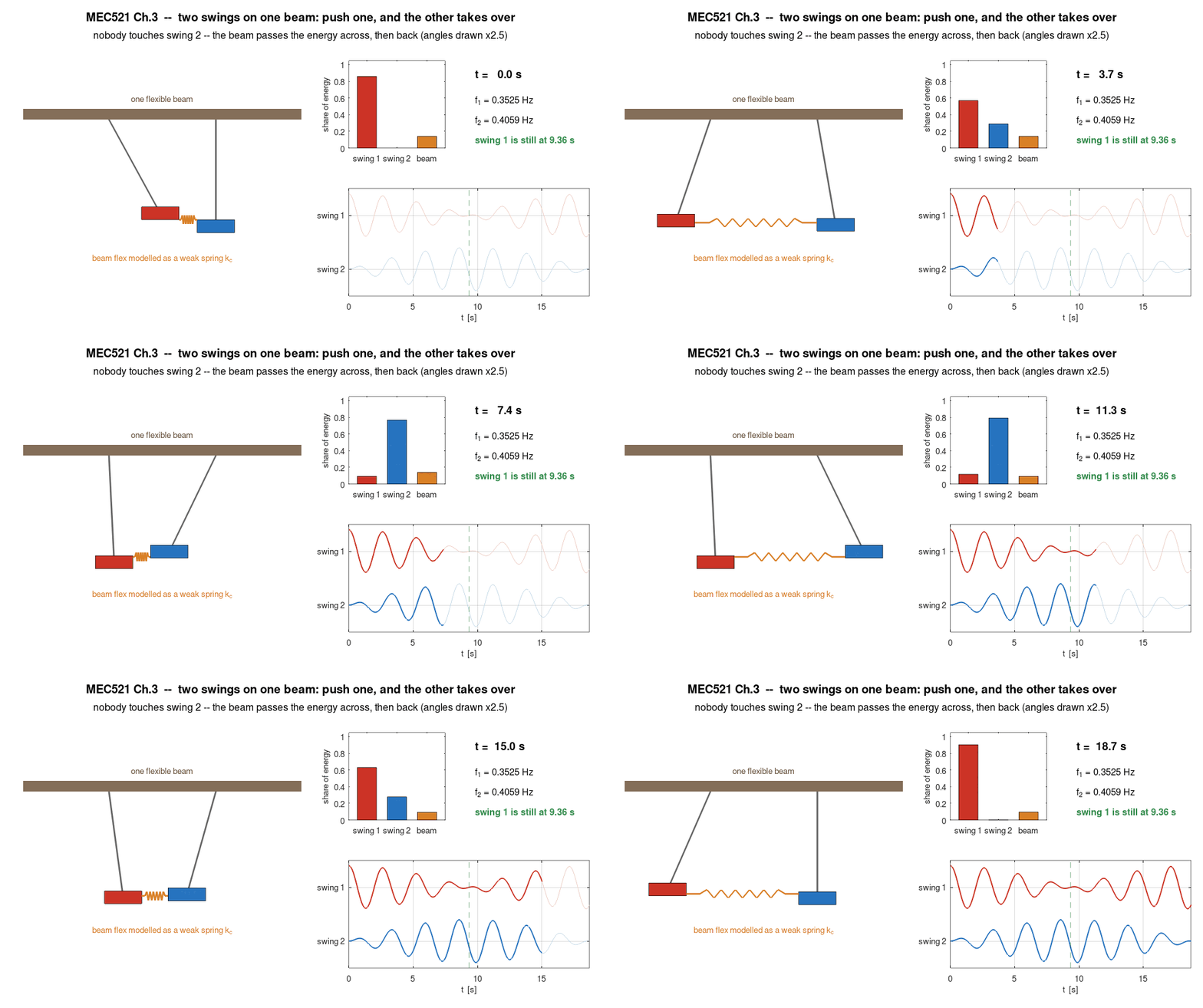
Part 5: One push, two modes
Part 6: The vibration absorber
Part 7: Misreadings and traps
Try it
Week 6 live lesson, 7 stepsTwo masses, two equationsA laptop on a cushioned lap desk: degrees of freedom, free-body diagrams and the mass and stiffness matrices (handbook §3.1–§3.2)Week 7 live lesson, 8 stepsThe two ways it likes to moveThe laptop and lap desk again: natural frequencies, mode shapes and the normal-mode solution (handbook §3.3–§3.4)Week 7 live lesson, 8 stepsA small mass that cancels a big buzzA tennis-racket string dampener: forced vibration of a two-DOF system and the vibration-absorber idea (handbook §3.5)
Cheat sheet
 One page for Chapter 3The key picture, which formula to use when, and the ways to lose marksOpen the Chapter 3 cheat sheet
Animations
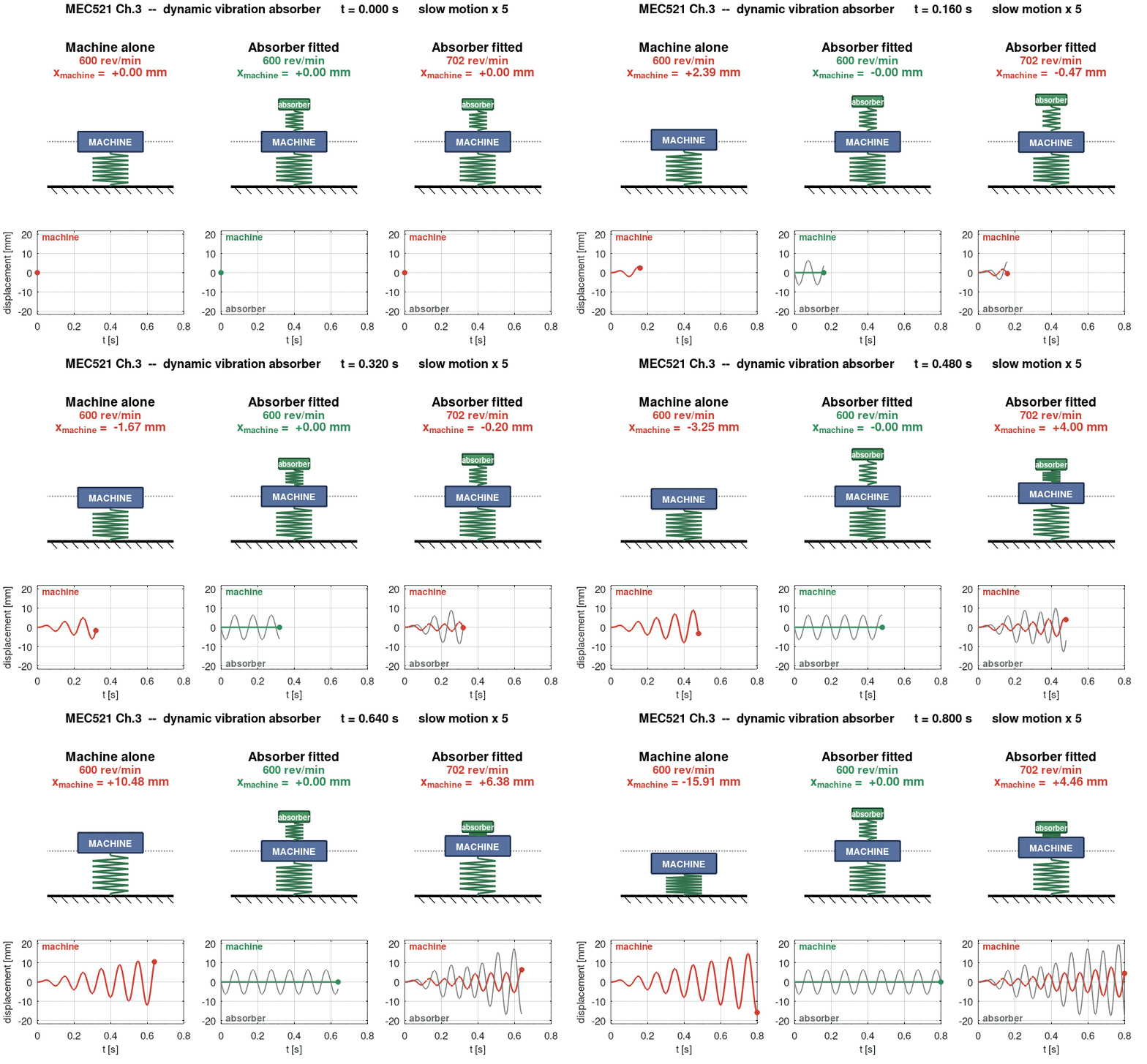
Show the 5 animations from the lecture slides
Download
- Lecture slides (handout) PDF, 6.8 MB
- Absorber demonstration (handout) PDF, 5.7 MB