CoursesMEC524 Control Systems

Chapter

Chapter 1: Introduction to Control Systems and Mathematical Review

Weeks 1–2, about 16 hours of study

What is covered

Week 1 28 Sept to 4 Oct 2026

  • Definition and concepts of control systems
  • Elements of a control system
  • Open-loop and closed-loop systems
  • Review of the Laplace transform

Week 2 5 Oct to 11 Oct 2026

  • Introduction to the basic PID controller
  • Mathematical review of ordinary differential equations
  • Conversion between ODE and Laplace domain

Cheat sheet
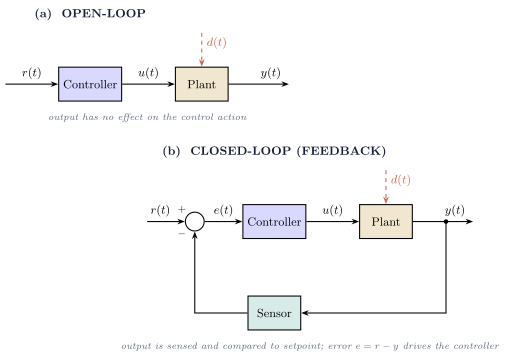
Open loop acts on a plan and never sees the result; closed loop measures the output and corrects the error. The animation drains the battery of a turntable and presses a finger on the platter: the closed loop holds its speed far better.One page for Chapter 1The key picture, which formula to use when, and the ways to lose marksOpen the Chapter 1 cheat sheet

Animations

Show the 4 animations from the lecture slides and the chapter overview
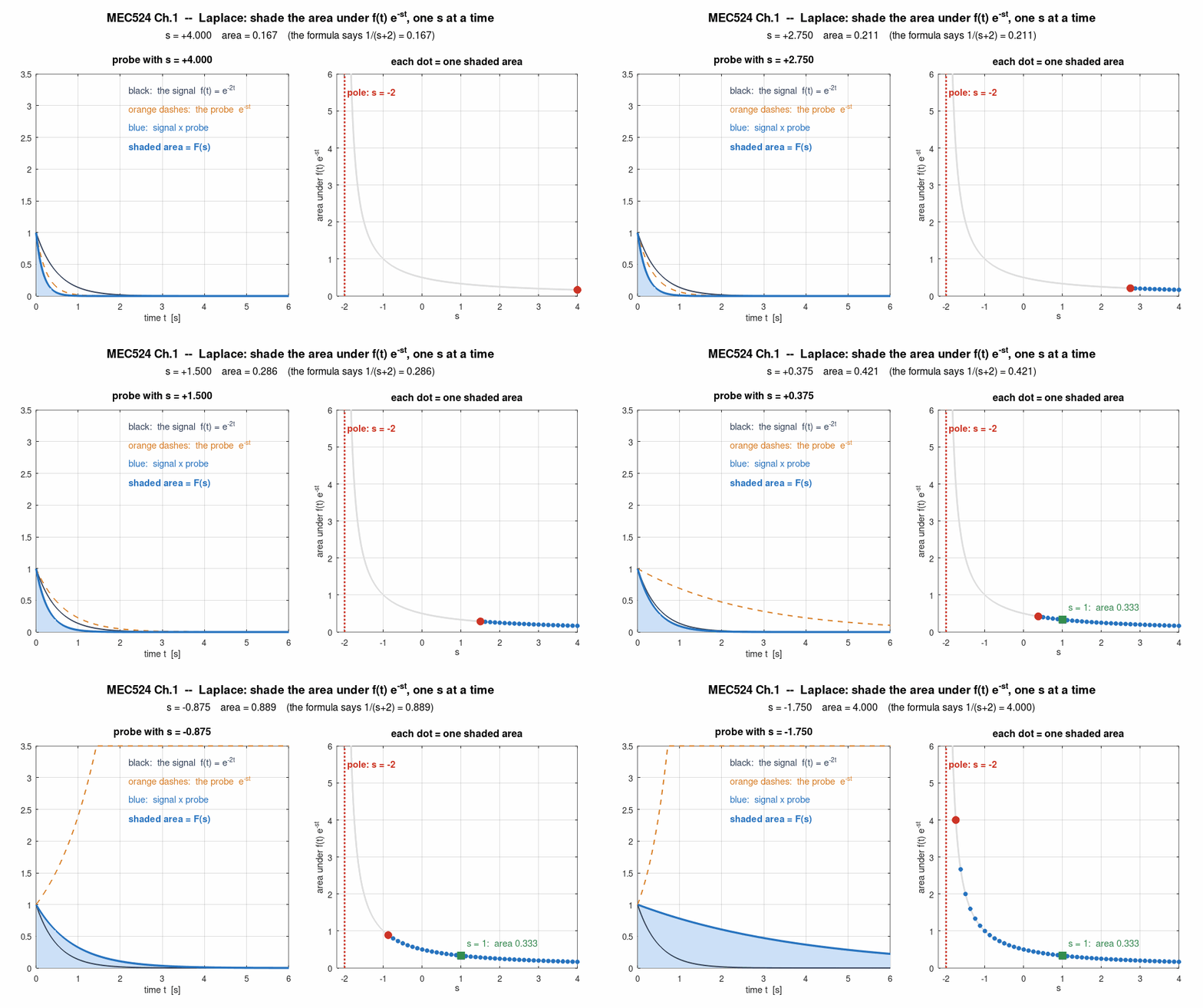
Watch s at work: Laplace as the area under f(t)e^{-st}, one s at a time; the area runs away near the pole s = −2
Watch s at work. Laplace as the area under f(t)e-st, one s at a time; the area runs away near the pole s = −2.
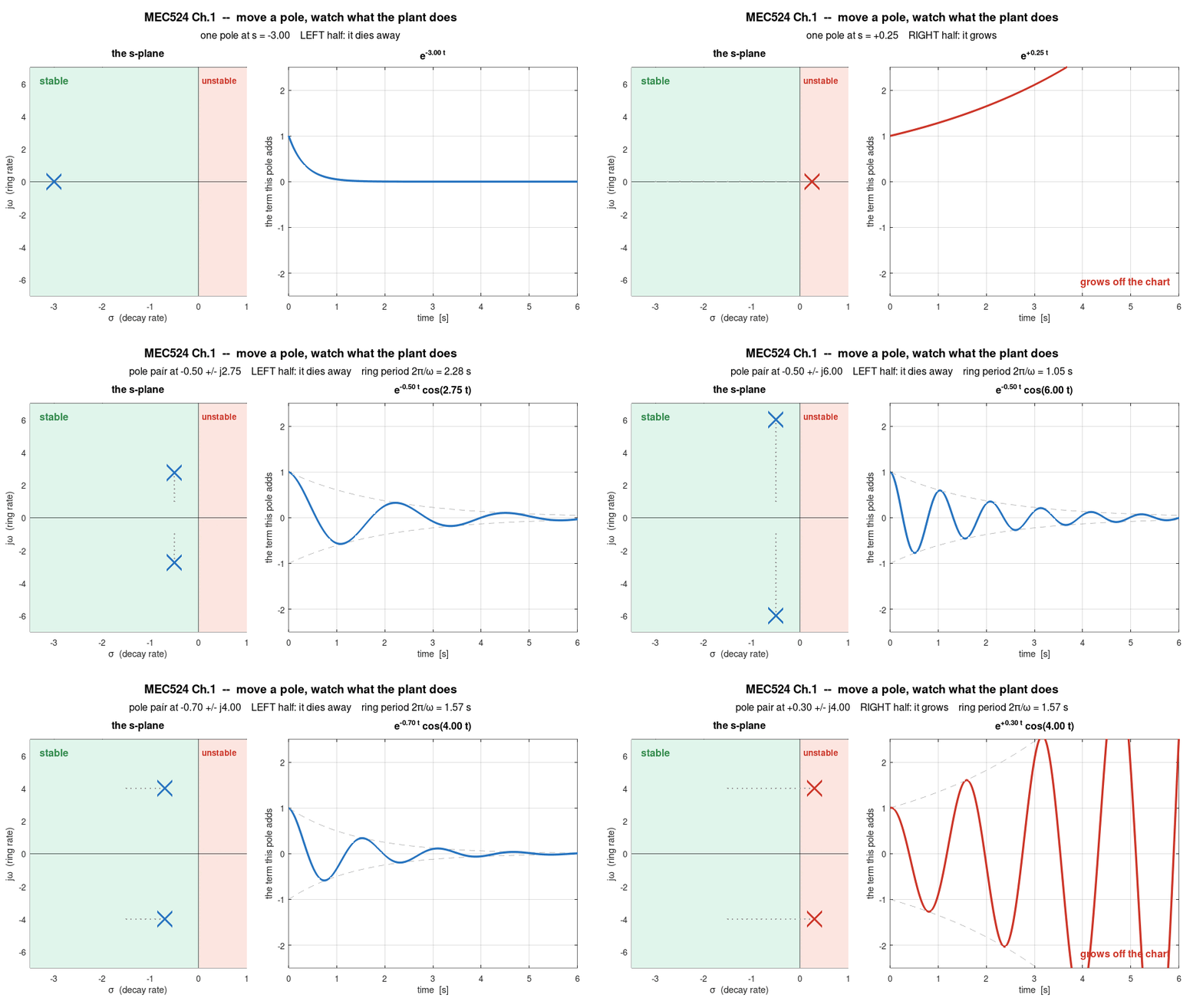
Watch a pole move: a real pole from −3 to +0.5; a pair ringing faster; a pair at ±j4 crossing the axis
Watch a pole move. A real pole from −3 to +0.5; a pair ringing faster; a pair at ±j4 crossing the axis.
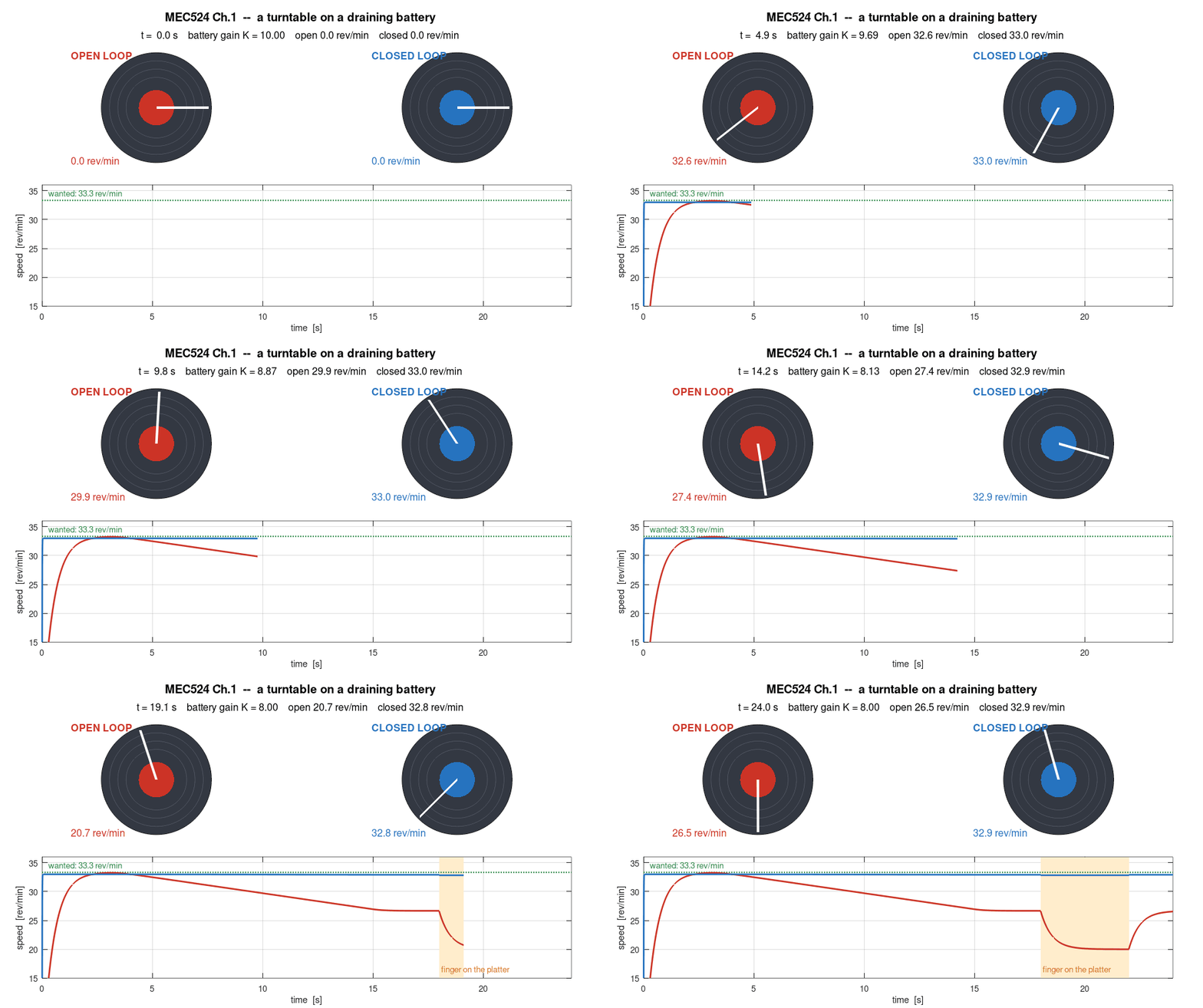
Watch the battery drain: open vs closed loop, K 10 → 8, then a finger on the platter
Watch the battery drain. Open vs closed loop, K 10 → 8, then a finger on the platter.
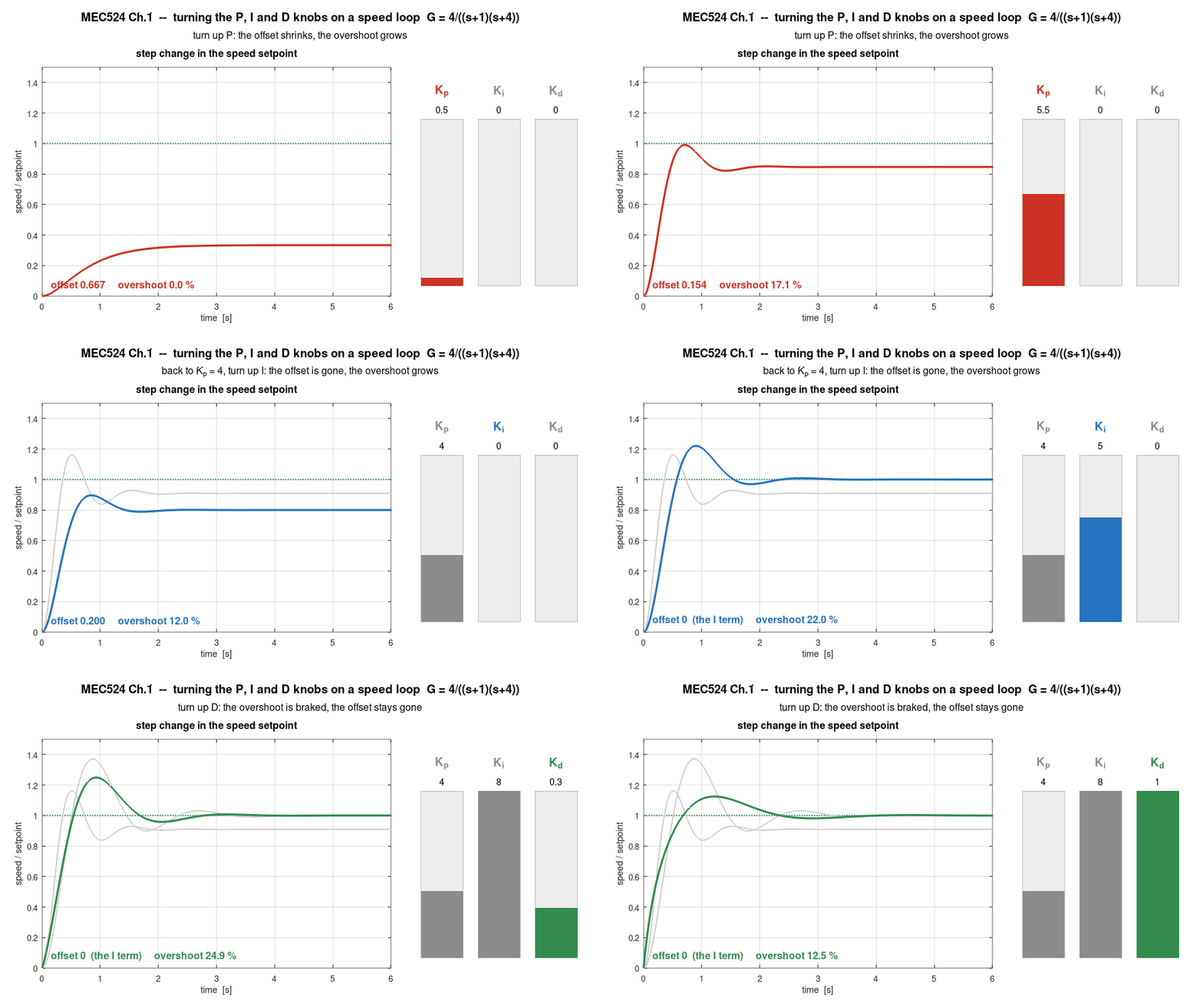
Watch the three knobs: G = 4/((s+1)(s+4)): Kp up, then Ki, then Kd
Watch the three knobs. G = 4/((s+1)(s+4)): Kp up, then Ki, then Kd.

Download