Chapter
Chapter 4: System Performance Analysis
What is covered
Week 10 30 Nov to 6 Dec 2026
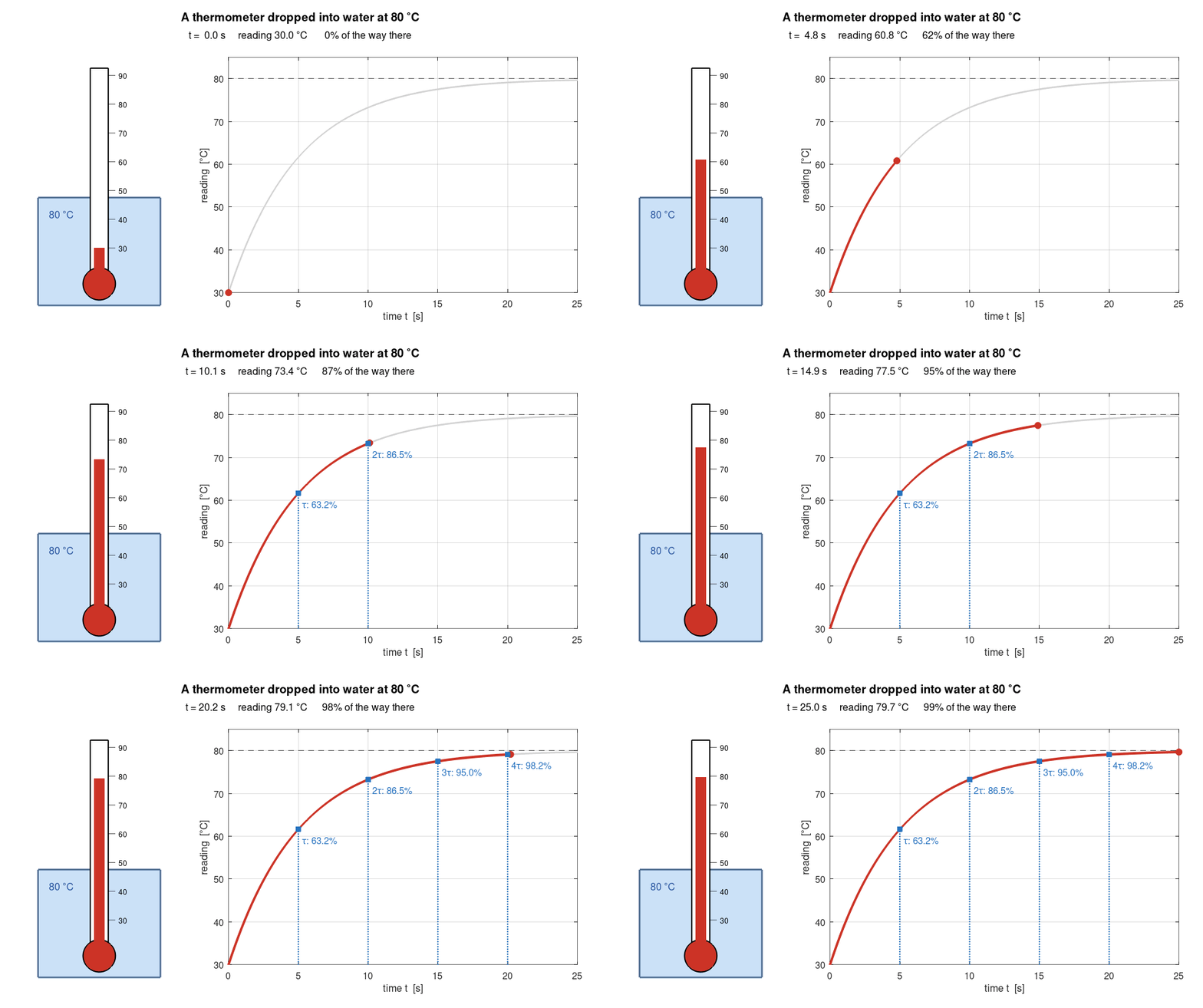
- First-order systems: transient and steady-state response
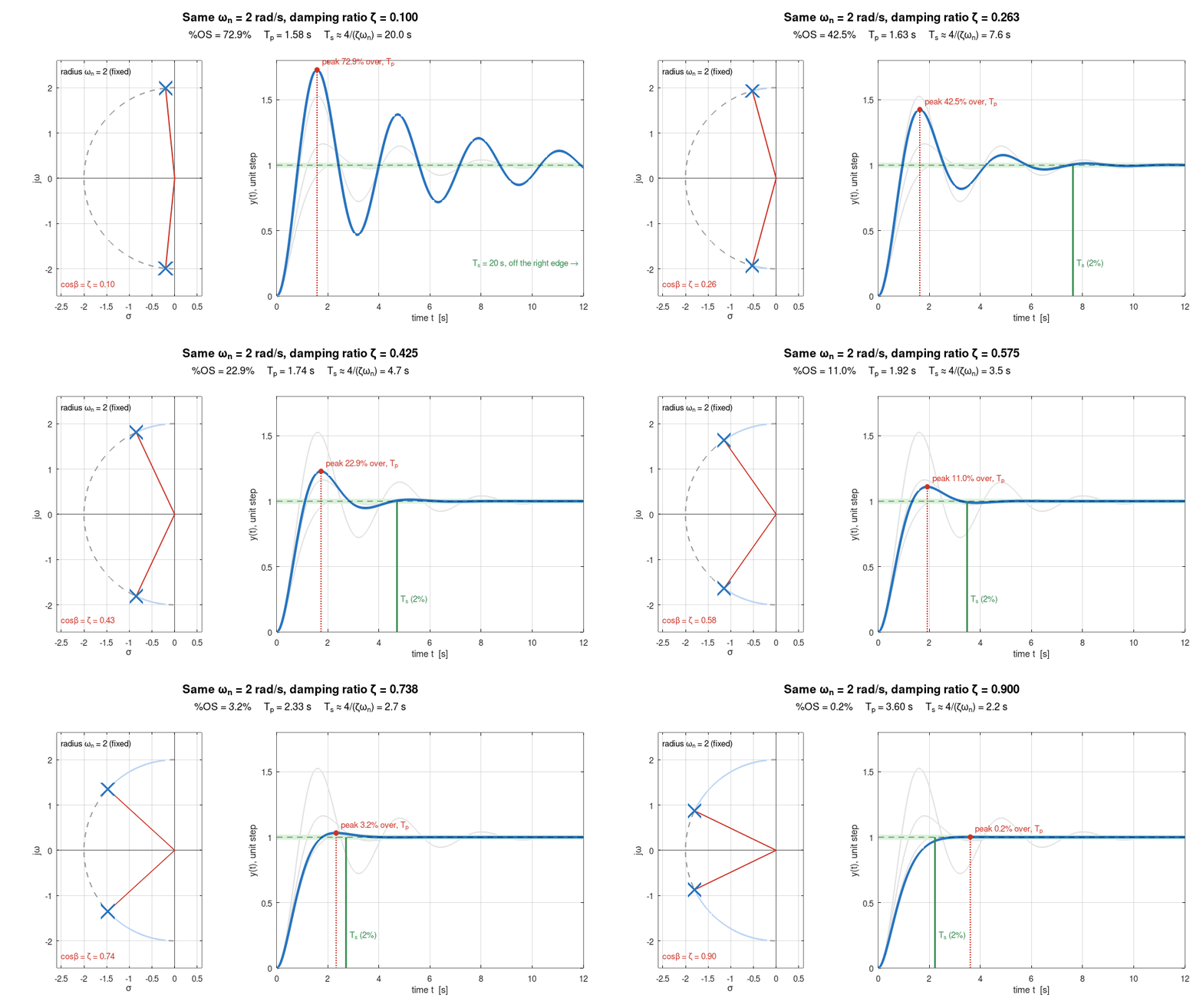
- Second-order systems: the standard form
- Performance specifications: %OS, Ts, Tp, Tr
Week 11 7 Dec to 13 Dec 2026
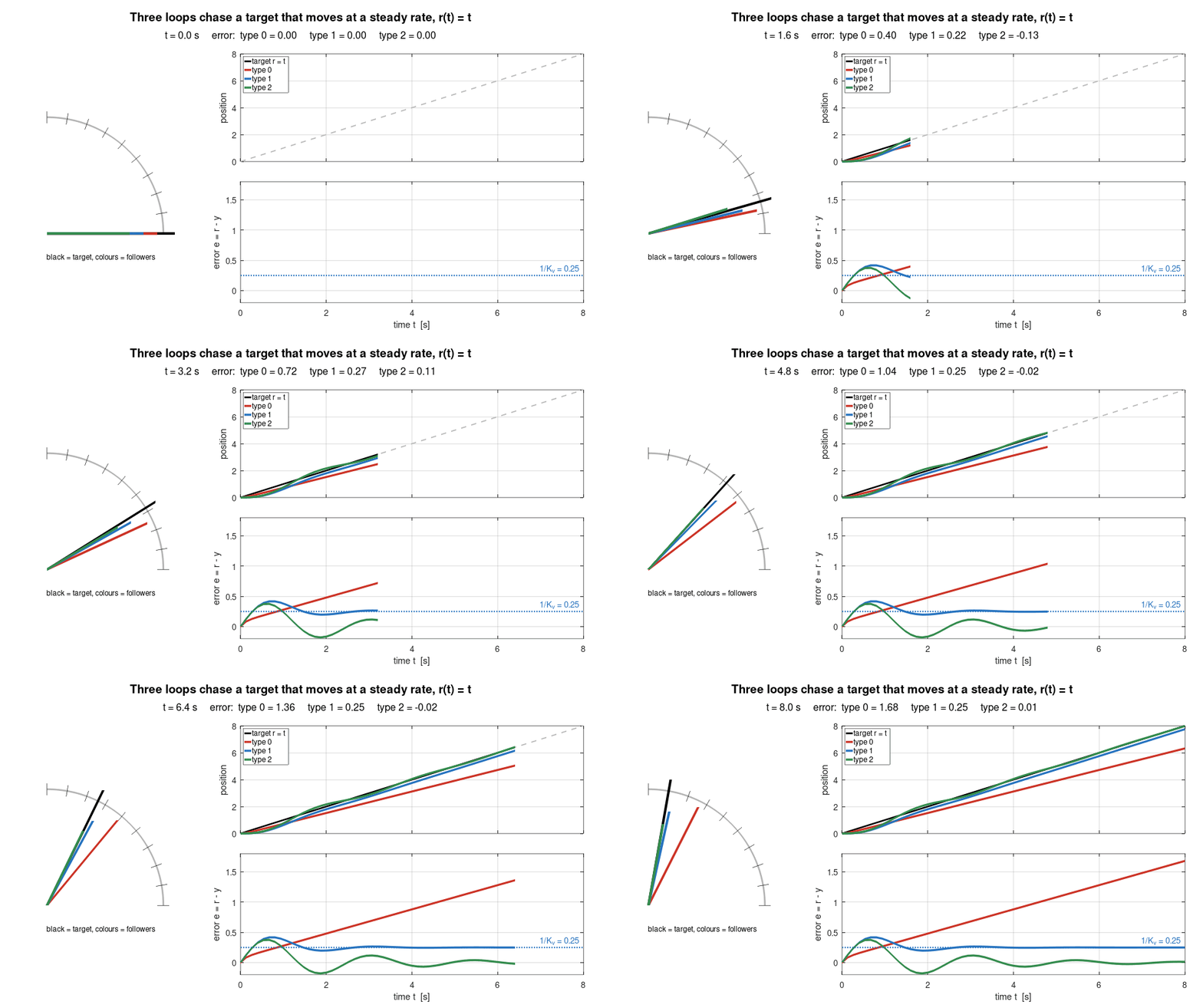
- Steady-state error and system type
- System stability and the BIBO criterion
- Routh–Hurwitz stability criterion
Week 12 14 Dec to 20 Dec 2026
- Root locus method: construction rules
- Asymptotes, breakaway points, jω-axis crossing
- MATLAB/Octave workshop: rlocus, rlocfind, Routh table
Lecture videos
Week 10, 5 parts, about 19 minutes
0 of 5 watched
Progress stays in this browser. Sign in with your UiTM account to record it for your lecturer.
Part 1: What a response tells you
Part 2: First order: one store, one exponential
Part 3: Second order: radius and angle
Part 4: From the poles to the specifications
Part 5: Worked examples, and when the formulas lie
Week 11, 2 parts, about 8 minutes
0 of 2 watched
Part 6: Steady-state error and system type
Part 7: Stability and the Routh array
Week 12, 2 parts, about 9 minutes
0 of 2 watched
Part 8: Root locus: the conditions and the rules
Part 9: Designing with the root locus
Try it
Week 10 live lesson, 9 stepsFirst order, then second orderA phone camera’s voice-coil autofocus: the coil current settles, then the lens rings on its flexureWeek 11 live lesson, 9 stepsKeeping up with a turnA robot lawn mower holding its heading: steady-state error, system type and the Routh limit on the gainWeek 12 live lesson, 9 stepsWhere the poles go as you turn the knobA magnetic levitating desk globe: an unstable plant, its root locus, and why a zero is neededVirtual labMass-spring-damper simulatorChange the parameters and watch the response
Cheat sheet
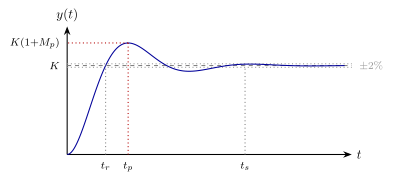 One page for Chapter 4The key picture, which formula to use when, and the ways to lose marksOpen the Chapter 4 cheat sheet
Animations
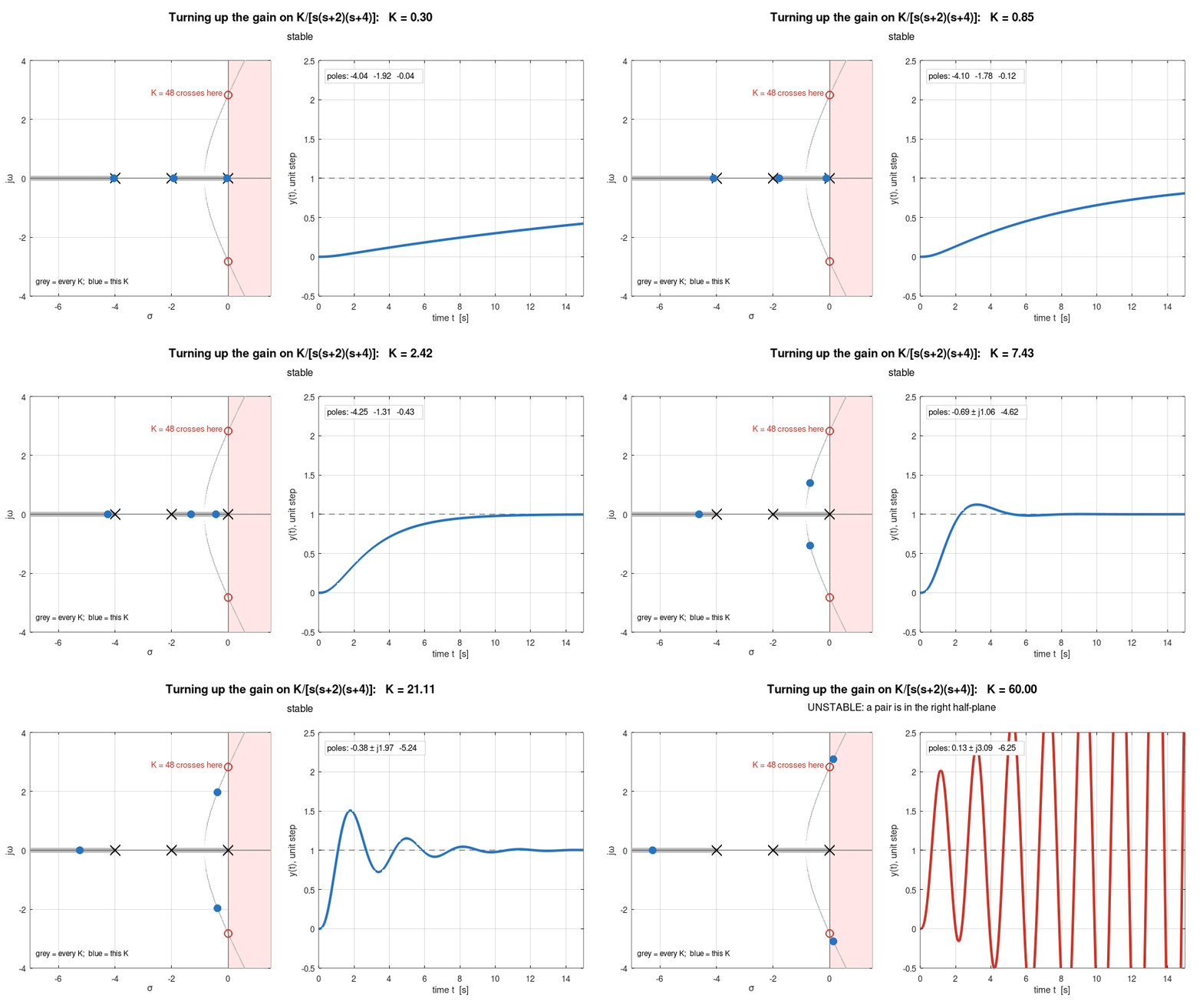
Show the 4 animations from the lecture slides and the chapter overview
Download
- Lecture slides (handout) PDF, 4.4 MB